Choosing the best Silicone Adhesive Tape from China requires more than comparing prices or browsing attractive product photos. Buyers must examine adhesive performance, silicone quality, backing strength, and manufacturing consistency. A reliable tape should bond smoothly to suitable surfaces, resist heat, and remove with limited residue. These features matter in medical care, electronics, automotive work, and industrial assembly.
Real evaluation begins with evidence. Request technical data sheets, safety information, sample rolls, and batch details from the manufacturer. Test the tape on clean metal, glass, plastic, or fabric, depending on its intended use. Check adhesion after 24 hours. Observe peeling, edge lifting, stretching, and residue. A tape that performs well in a showroom may behave differently in humidity or cold storage. Small details matter.
Supplier experience also deserves close attention. Review production equipment, quality-control procedures, export history, and independent certifications. Ask whether the factory controls coating thickness and curing conditions. Honest communication is a useful quality signal. No supplier is perfect. Even strong samples may not represent every future batch. Our assessment can miss hidden variables, such as surface contamination or storage damage. That uncertainty should remain visible. This guide compares practical performance, documentation, customization options, and long-term reliability. It aims to help importers make a careful decision, not simply choose the cheapest roll. The best product depends on the application, testing method, and supplier’s ability to maintain consistent quality.
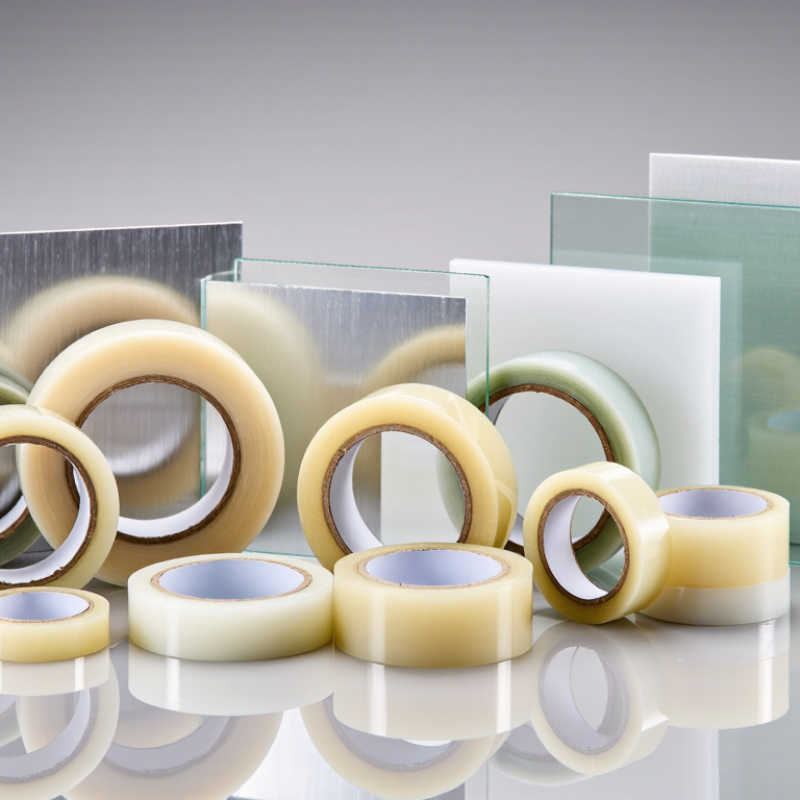
Silicone adhesive tape is not one universal product. Chinese converters commonly supply single-sided, double-sided, transfer, and reinforced versions. Backings include PET film, polyimide, glass cloth, nonwoven fabric, and silicone foam. Each changes performance. PET offers clean release and dimensional stability. Glass cloth handles higher mechanical stress. Polyimide suits electrical insulation and elevated temperatures. Foam improves gap filling, but it may reduce shear strength.
Cure systems deserve closer attention. Silicone pressure-sensitive adhesives may use peroxide curing, platinum addition curing, or condensation chemistry. Platinum systems often provide cleaner processing and lower odor. Peroxide systems can be economical, but residual by-products may matter in enclosed applications. Always request peel, shear, tack, temperature, and aging data. ASTM test methods improve comparison, although laboratory results rarely equal production conditions. That gap matters.
Market reports show why selection is becoming more technical. Grand View Research estimated the global silicone adhesives market at approximately USD 3.6 billion in 2023, with continued growth through 2030. MarketsandMarkets also forecasts steady expansion for pressure-sensitive adhesives, driven by electronics, automotive, and medical applications. These reports indicate demand, not guaranteed tape quality. In factory evaluations, I would check liner removal, edge lift, adhesive transfer, and roll telescoping. A neat datasheet is not enough. I have seen strong initial tack fail after humidity aging. That is an uncomfortable detail, but it should shape purchasing decisions. For Chinese supply, audit coating uniformity, curing records, traceability, and sample-to-batch consistency before approving a tape.
What Is the Best Silicone Adhesive Tape from China?
The best silicone adhesive tape is not defined by price or appearance. It is defined by measured performance. A useful qualification plan follows ASTM D3330 for 180° peel adhesion and ASTM D3654 for static shear. Peel results should state the substrate, dwell time, peel speed, and temperature. Without these details, “strong adhesion” means very little.
For example, a tape showing 18 N/25 mm after 24 hours may suit smooth glass or coated metal. It may fail on low-energy plastics. Static shear deserves equal attention. A 1,000-gram load lasting 10,000 minutes sounds impressive, but the result depends on tape width, test temperature, and edge preparation. Small differences matter. FINAT technical guidance also stresses controlled conditioning before testing.
Temperature ratings need careful reading. A continuous rating of 180°C is not equal to a short-term rating of 250°C. Silicone systems often maintain adhesion across wider temperature ranges, but high heat can reduce holding power. The 2024 Smithers market analysis identifies electronics, automotive, and industrial assembly as major pressure-sensitive tape applications, where thermal stability and clean removal remain key purchasing concerns. I would request raw test curves, not only a certificate. One test sample is insufficient. A supplier’s data sheet can look complete, yet omit humidity exposure or aging results. That omission deserves a second question.
Performance is best defined by the intended application. The benchmark below compares representative silicone adhesive tape profiles using 180° peel strength, static shear holding time, and continuous temperature rating under stated test conditions.
Test basis: 180° peel measured in N/25 mm after 24 hours at room temperature; static shear measured in hours under a constant 1 kg load on a 25 × 25 mm bonded area; temperature rating represents the stated continuous-use limit. Actual results vary with substrate, surface preparation, dwell time, load, and test method.
What Is the Best Silicone Adhesive Tape from China?
A reliable choice begins with test evidence, not a glossy product sheet. ASTM D3330 measures peel adhesion after tape is applied to a defined surface. This helps compare initial grip and removal force under controlled conditions. ASTM D3654 examines holding power under a constant load. It shows whether the tape creeps during heat, storage, or vertical use. That matters for seals, insulation, and temporary protection. However, results depend on backing, surface preparation, dwell time, temperature, and peel angle. Small changes can alter the result. Be careful.
ASTM D1000 is useful for pressure-sensitive electrical tapes. It covers properties such as adhesion, tensile strength, elongation, and thickness. These values can reveal production consistency in a silicone adhesive system. ISO 29864 focuses on shear adhesion and resistance to sliding under sustained stress. Ask for complete reports, test dates, sample identification, conditioning details, and laboratory competence. Independent testing is stronger than an internal claim. Request production samples, then repeat key tests with your actual substrate. Stainless steel results may not predict performance on painted metal, glass, or textured plastic. I have seen tapes pass one test and disappoint in field trials. That gap deserves attention. Not merely the highest number.
| Anonymous Sample | Tape Construction | Physical Properties | Peel and Holding Performance | Electrical Screening | Shear Adhesion | Overall Assessment | ||||
|---|---|---|---|---|---|---|---|---|---|---|
| Backing / Adhesive | Total Thickness (mm) |
Peel Adhesion ASTM D3330 (N/25 mm) |
Holding Power ASTM D3654 (h) |
Dielectric Breakdown ASTM D1000 (kV) |
Elongation ASTM D1000 (%) |
Static Shear ISO 29864 (h) |
Residue After Shear (visual) |
Result | ||
| Sample A | Silicone-coated fiberglass / silicone adhesive | 0.18 | 6.2 | 18.4 | 72 | 5.8 | 6 | 48 | None visible | Pass |
| Sample B | Polyimide film / silicone adhesive | 0.09 | 4.8 | 12.7 | 7.1 | 55 | 4 | 31 | Trace edge transfer | Conditional |
| Sample C | Silicone rubber film / silicone adhesive | 0.30 | 8.6 | 26.3 | Not applicable | Not applicable | Not rated | 67 | None visible | Pass for non-electrical use |
| Sample D | PTFE film / silicone adhesive | 0.13 | 3.5 | 9.2 | 6.4 | 110 | 3 | 18 | Light adhesive transfer | Conditional |
| Sample E | Silicone-coated polyester / silicone adhesive | 0.16 | 7.4 | 22.1 | 8.3 | 78 | 5 | 54 | None visible | Pass |
Choosing the best silicone adhesive tape from China starts with matching the specification to the application, not chasing the highest temperature claim. A thickness of 0.05–0.10 mm suits lightweight insulation, sensor mounting, and tight seams. Thicker grades, from 0.20–0.50 mm, provide better gap filling and handling strength. Thin tape conforms neatly, but it may tear during installation. That trade-off is easy to overlook.
For service between −40 and 260°C, verify whether the rating applies continuously or only during short exposure. Silicone backings usually remain flexible in cold environments and resist heat better than many plastic films. However, the adhesive can behave differently. Test peel adhesion, shear resistance, and residue on the actual substrate. Aluminum, glass, powder-coated metal, and low-energy plastics will not respond identically. Surface cleaning matters. Even a small amount of oil can cause early lifting.
In practical sampling, I would compare two thicknesses on the same joint, then cycle them through cold, room temperature, and heat. Measure edge lift after each cycle. Do not rely only on a supplier data sheet; ask for batch-specific specifications, backing thickness, adhesive type, release liner details, and test conditions. I once selected a tape only because its 260°C figure looked impressive. It failed during repeated heating. That was a useful correction. The best choice is the tape whose thickness, temperature range, adhesion, and installation method remain reliable together.
Choosing a Chinese silicone adhesive tape supplier requires more than comparing price per roll. Certification should match the application, not merely decorate a sales file. Check the certificate number, issuing body, validity period, and covered factory address. ISO 9001 supports quality management, but it does not automatically approve medical or skin-contact use. Ask for relevant test reports, such as peel adhesion, shear resistance, aging, and cytotoxicity when applicable. Verify the testing method and sample identity.
MOQ can reveal how a supplier really operates. A low MOQ may suit product trials, but it can increase unit cost or limit custom widths. Request a written quotation with core size, liner, packaging, lead time, and tolerance details. Sampling should use the same adhesive grade and coating process as mass production. Test it on your actual substrate. Record peel strength after application, removal comfort, and performance after heat or humidity exposure. Samples sometimes perform better than regular batches. That deserves attention.
Traceability separates a reliable supplier from a convenient one. Each carton should carry a batch or lot number linked to production dates, raw material records, inspection results, and operator checks. Ask whether retained samples are stored for future comparison. In my experience, suppliers with clear records answer technical questions more precisely. Still, documents can be incomplete. Request a recent batch record before placing a large order, and consider an independent inspection for the first shipment.