Leave Your Message
Choosing the best Cold Silicone Glue supplier requires more than comparing prices or browsing attractive product pages. The global adhesives and sealants market was valued at approximately USD 77.4 billion in 2023, according to Grand View Research. MarketsandMarkets also expects continued growth, driven by construction, electronics, transportation, and medical applications. Demand is rising. Supplier quality cannot remain an afterthought.
A reliable supplier should show documented viscosity ranges, curing behavior, storage conditions, and batch traceability. Ask for technical data sheets and recent test reports. Check whether the glue bonds glass, metal, ceramics, plastics, or coated surfaces. A transparent supplier should explain surface preparation, curing time, temperature limits, and packaging stability. Small details matter. A poorly sealed cartridge can develop skin before use. That mistake becomes expensive on a production line.
Dr. Johannes Karl Fink, a recognized silicone materials author, emphasizes a practical principle: “Performance depends on the complete formulation, not one ingredient alone.” His point deserves careful reflection. Some suppliers promote strong initial adhesion while hiding long-term aging results. Others provide impressive laboratory numbers without application evidence. Therefore, evaluate samples under real conditions, including humidity, heat, vibration, and repeated handling. Request independent validation where possible. ISO-based testing can improve confidence, but standards do not replace application experience. The best supplier combines consistent manufacturing, responsive technical support, realistic documentation, and honest limitations. No supplier is perfect. A thoughtful buyer checks the gaps before signing a long-term agreement.
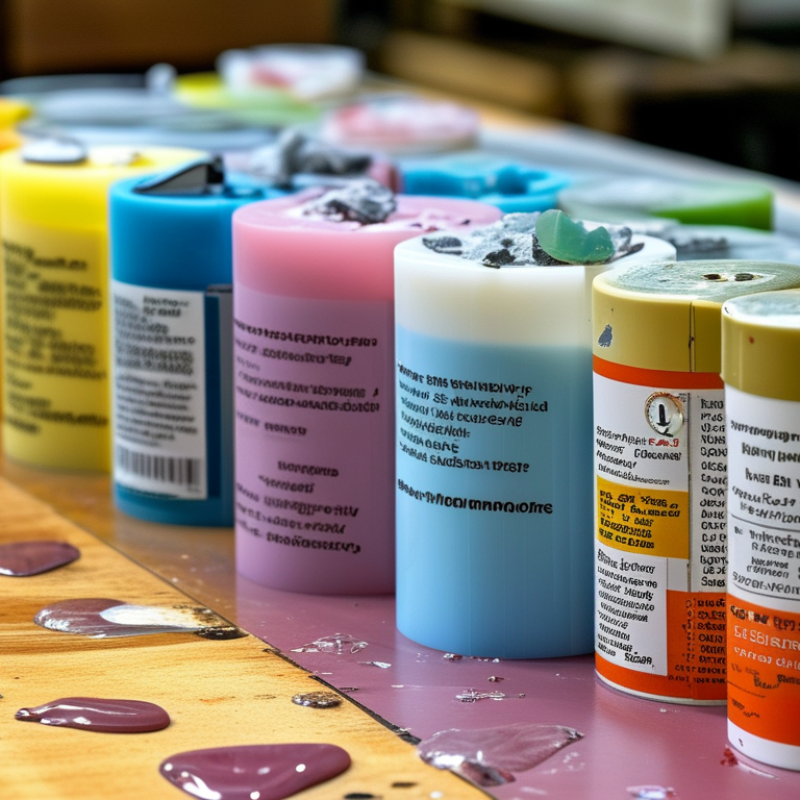
Cold silicone glue usually means room-temperature-vulcanizing silicone adhesive. It cures without an oven, often through moisture in the air. The material stays flexible after curing. That makes it useful for glass, ceramics, aluminum, plastics, cable parts, and bathroom fixtures. A thin bead can seal a window frame, while a thicker layer can absorb vibration around a small appliance. It is not simply “cold glue.” Curing speed depends on humidity, temperature, bead thickness, and formulation. Some products release noticeable odor during curing. That detail is easy to ignore.
Industry reports show why this material attracts manufacturers. Grand View Research has estimated the global silicone adhesives market will grow steadily through the decade, supported by construction, electronics, transportation, and medical equipment applications. MarketsandMarkets has also identified flexibility, weather resistance, and temperature stability as major demand factors. Report estimates differ, so buyers should not treat one forecast as absolute evidence. Practical testing matters more. A reliable supplier should provide technical data sheets, safety documents, batch traceability, viscosity ranges, cure-time data, and adhesion results. Request samples for the real substrate combination. Test them at room temperature and high humidity. Check the cured surface after seven days. Pull tests may reveal weak bonding, but peel resistance and aging tests often reveal more. Supplier selection should follow measured performance, not attractive packaging or vague claims. Test twice. Materials can surprise you.
| Category | Evaluation Dimension | Typical Technical Data or Benchmark | Why It Matters | How to Verify the Supplier |
|---|---|---|---|---|
| Product Definition | Meaning of cold silicone glue | Usually refers to room-temperature-vulcanizing silicone adhesive, commonly called RTV silicone. It cures without oven heating after exposure to moisture or through a two-component chemical reaction. | Prevents confusion between silicone adhesive, hot-melt adhesive, and heat-cured silicone systems. | Request the technical data sheet and confirm the curing mechanism, component type, and recommended curing temperature. |
| Product Type | One-component or two-component formulation | One-component RTV is ready to use and normally cures from the outside inward. Two-component RTV is mixed before use and generally provides more controlled, deeper curing. | The choice affects equipment, production speed, storage, mixing, and achievable bond thickness. | Review the mixing ratio, working time, equipment requirements, and cure schedule. |
| Curing Performance | Skin formation and full cure | Many one-component RTV products form a surface skin in approximately 5–30 minutes and reach functional cure in roughly 24 hours at about 23°C and 50% relative humidity. Thick sections may require longer. | Cure speed directly influences production throughput and handling time. | Carry out a test under actual temperature, humidity, bead size, and ventilation conditions. |
| Curing Chemistry | Neutral-cure or acetoxy-cure system | Acetoxy systems can release acetic acid during curing and may be unsuitable for some metals, electronics, and sensitive substrates. Neutral-cure systems generally offer better compatibility with metals, plastics, and electronic components. | Incorrect chemistry can cause corrosion, odor issues, poor adhesion, or damage to sensitive materials. | Check the safety data sheet, odor profile, by-products, and substrate compatibility statement. |
| Bonding Performance | Adhesion to common substrates | Suitable grades may bond to glass, ceramic, aluminum, painted metal, many plastics, and silicone rubber. Some low-surface-energy plastics such as polyethylene and polypropylene often require surface treatment or a primer. | Adhesion varies substantially by substrate, surface energy, cleanliness, and formulation. | Test lap shear, peel, or tensile adhesion using the exact production materials and surface preparation. |
| Mechanical Properties | Hardness, tensile strength, and elongation | General-purpose cured RTV silicone commonly has a Shore A hardness of approximately 20–60, tensile strength around 1–8 MPa, and elongation often between 100% and 600%, depending on formulation. | These properties indicate whether the adhesive can absorb vibration, movement, and thermal expansion. | Compare standardized test data, preferably using ASTM or ISO methods stated on the technical data sheet. |
| Temperature Resistance | Continuous and intermittent operating temperature | Many cured silicone adhesives operate continuously within approximately -50°C to 180°C, while specialized grades may support higher intermittent temperatures. | Silicone remains flexible over a wide temperature range, making it useful for thermal cycling and outdoor applications. | Confirm the continuous rating, peak exposure limit, thermal-aging results, and performance after repeated temperature cycling. |
| Environmental Resistance | Water, humidity, weathering, and UV resistance | Cured silicone generally provides good resistance to moisture, ozone, and ultraviolet exposure. Performance still depends on joint design, substrate adhesion, and the specific formulation. | Important for exterior seals, lighting assemblies, appliances, and equipment exposed to condensation. | Request water-immersion, humidity-aging, UV-aging, and outdoor-weathering test data where applicable. |
| Electrical Applications | Insulation and electronic compatibility | Silicone adhesives are commonly used for insulation, protection, and component fixation. Electronics may require low-corrosion, low-ionic, low-outgassing, or thermally conductive grades. | General-purpose sealant may not meet the reliability requirements of electronic assemblies. | Check dielectric strength, volume resistivity, ionic content, outgassing data, and any required industry testing. |
| Application Method | Viscosity and dispensing format | Low-viscosity grades are suitable for wetting, coating, or infiltration. Medium- and high-viscosity grades are better for gap filling, bead application, and vertical surfaces. Common packages include cartridges, tubes, pails, and drums. | Viscosity affects bead stability, dispensing accuracy, automated production, and material waste. | Match viscosity and packaging with manual, pneumatic, robotic, or meter-mix dispensing equipment. |
| Bond-Line Design | Gap filling and joint movement | Silicone is well suited to flexible joints and movement because cured silicone has high elasticity. A joint should allow adequate adhesive thickness and avoid restricting natural expansion and contraction. | Rigid or excessively thin joints can reduce durability even when the adhesive itself has good properties. | Ask for recommended joint dimensions, maximum bead thickness, movement capability, and design guidelines. |
| Surface Preparation | Cleaning, abrasion, and primer requirements | Surfaces normally need to be clean, dry, and free from oil, dust, release agents, and loose particles. Solvent cleaning, light abrasion, or primer may be required for difficult substrates. | Surface preparation is one of the most important factors affecting bond strength and service life. | Request substrate-specific preparation instructions and conduct a peel or pull test after the complete cure period. |
| Safety and Compliance | VOC, hazardous substances, and workplace handling | Curing by-products and solvent content vary by formulation. Some products may release acidic or alcohol-based by-products during cure. Ventilation and suitable personal protective equipment may be necessary. | Safety requirements affect worker protection, factory ventilation, transport, and regulatory approval. | Obtain the current safety data sheet, composition information where available, transport classification, and applicable compliance declarations. |
| Quality Control | Batch consistency and inspection data | Useful quality indicators include viscosity, density, color, skin time, cure rate, hardness, adhesion, tensile strength, and packaging integrity. | Consistent batch performance reduces production variation and customer complaints. | Request a certificate of analysis for each batch and confirm that test methods and acceptance limits are documented. |
| Shelf Life | Storage temperature and expiry period | Unopened one-component RTV products commonly have a shelf life of approximately 9–18 months when stored in sealed packaging under the supplier's specified conditions. Exact limits vary by formulation and package size. | Improper storage can cause premature skin formation, viscosity change, reduced adhesion, or incomplete curing. | Check manufacturing date, expiry date, recommended storage temperature, packaging orientation, and first-in-first-out procedures. |
| Application Areas | Typical end-use sectors | Common uses include glass and window assembly, lighting, appliance sealing, automotive component fixation, electrical insulation, enclosure sealing, solar equipment, bathroom fixtures, and general industrial bonding. | Different industries require different combinations of adhesion, flexibility, temperature resistance, electrical performance, and regulatory compliance. | Ask for application-specific technical guidance and documented case testing without relying solely on general marketing claims. |
| Supplier Capability | Technical support and customization | A capable supplier should provide formulation selection, substrate testing, curing guidance, dispensing recommendations, troubleshooting, and controlled product changes. | Technical support is especially important when the application involves mixed substrates, automation, or long-term outdoor exposure. | Evaluate response time, test-laboratory capability, documentation quality, sample support, and change-notification procedures. |
| Commercial Evaluation | Total cost rather than unit price | Total cost includes adhesive price, packaging, waste, dispensing equipment, labor, curing time, rejected parts, storage, transport, and shelf-life losses. | A lower purchase price may create higher production costs if the product cures slowly, requires primer, or produces excessive waste. | Compare cost per assembled part or sealed meter using a controlled production trial. |
| Supplier Reliability | Capacity, lead time, and continuity of supply | A reliable supplier should provide documented production capacity, stable raw-material sourcing, realistic lead times, batch traceability, and a contingency plan for interruptions. | Supply interruptions can stop production even when the adhesive meets all technical requirements. | Review average lead time, minimum order quantity, forecast policy, safety-stock options, and business-continuity practices. |