China Top 10 Roofing Stone Suppliers for Global Buyers
Choosing the right Roofing Stone supplier can shape a project’s appearance, lifespan, and installation cost. Global buyers need more than attractive photographs and competitive quotations.
This guide introduces ten leading Chinese suppliers serving international markets. It considers quarry experience, product consistency, processing capability, export documentation, and buyer support. Real purchasing decisions often depend on details: split-face texture, calibrated thickness, pallet protection, moisture resistance, and container loading quality. A sample may look excellent under showroom lighting, yet perform differently after exposure to rain, frost, or intense sunlight. That difference matters.
We examine suppliers through an evidence-based lens. Useful evidence includes factory audits, laboratory reports, project references, production photographs, and clear inspection procedures. Certifications can support trust, but they should not replace independent verification. Experienced buyers should request current samples, packaging images, test data, and written tolerances before placing large orders.
No supplier is perfect.
Some companies offer strong stone quality but limited customization. Others respond quickly yet provide weaker technical documentation. These limitations deserve attention, not concealment. Pricing also requires careful interpretation because quarry origin, cutting method, thickness, surface finish, packing, and shipping terms can change the final cost. Our comparison aims to help architects, contractors, distributors, and homeowners ask sharper questions. It does not promise one universal winner. Regional climate, roof design, installation skills, and local building requirements still influence the best choice. The most reliable decision combines documented supplier performance with hands-on sample evaluation.
Understanding China’s Roofing Stone Supply Market
China Top 10 Roofing Stone Suppliers for Global Buyers
Understanding China’s Roofing Stone Supply Market
China’s roofing stone market combines local quarry resources, processing expertise, and export-oriented logistics. Suppliers commonly offer slate, sandstone, granite, and other durable natural stones. Availability differs by quarry location, seasonal production, and regional processing capacity.
A credible supplier should provide technical data for water absorption, flexural strength, density, and freeze-thaw performance. These figures matter when roofing materials face heavy rain, frost, or strong sunlight. Ask for recent batch samples, not only polished showroom pieces. Subtle color changes can appear across different quarry layers.
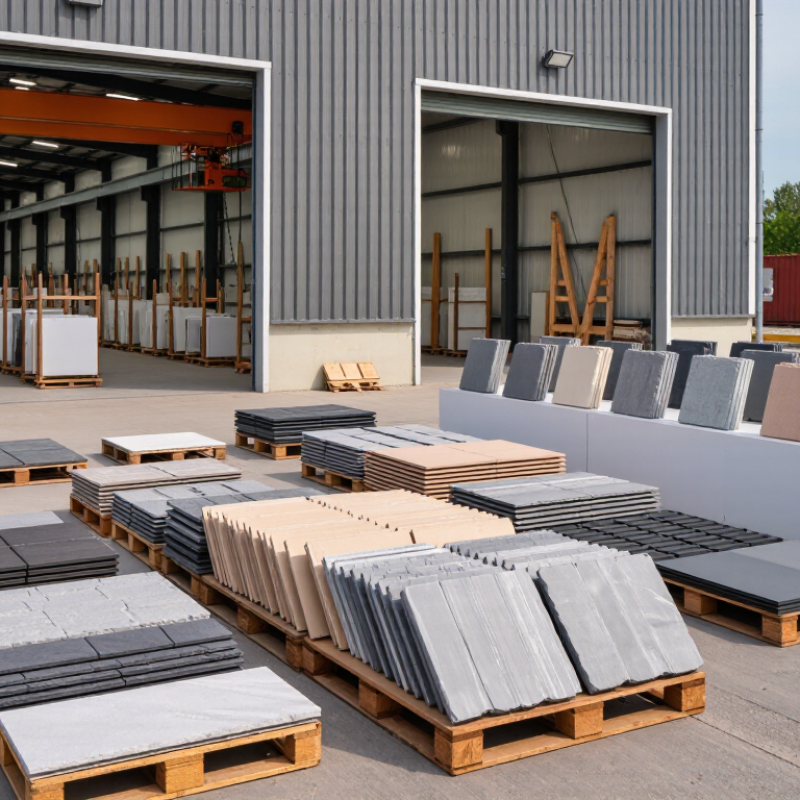
Check cutting tolerances carefully. Uneven thickness may increase installation time and waste. Packaging also deserves attention: reinforced pallets, moisture protection, and corner protection reduce damage during long-distance shipping. Export documents should match the stone type, quantity, dimensions, and declared origin.
Price alone is unreliable. A low quotation may exclude sorting, edge finishing, inland transport, or replacement allowances. Factory visits and independent inspections can reveal more than online catalogs. Still, inspections are not perfect. Dust, lighting, and carefully selected samples may hide production inconsistencies. Buyers should approve a written specification, define acceptable variation, and test a larger pre-shipment sample.
The market is competitive, but not uniform. Suppliers may differ greatly in quarry ownership, quality control, and response speed. Careful comparison remains necessary.
Criteria for Evaluating the Top Ten Chinese Suppliers
China Top 10 Roofing Stone Suppliers for Global Buyers
Evaluating ten Chinese roofing stone suppliers requires more than comparing catalog prices. Grand View Research estimated the global natural stone market at about USD 50 billion in 2023, showing strong competition and varied quality. Buyers should inspect quarry origin, mineral composition, water absorption, flexural strength, and freeze-thaw performance. These details matter on a roof exposed to rain, snow, and sharp temperature changes.
A credible supplier should provide recent laboratory reports, batch traceability, and samples from actual production. Test results should follow relevant ASTM, EN, or ISO methods, depending on the destination market. ISO 9001 certification can support process control, but it cannot prove every shipment is consistent. The U.S. Geological Survey’s Mineral Commodity Summaries emphasizes the importance of reliable dimension-stone production data; procurement teams should still verify factory claims independently. Ask for quarry maps, production capacity, packing photographs, and container-loading records.
Environmental evidence also deserves attention. The International EPD System requires documented life-cycle information, including energy use and transport impacts. Suppliers with clear environmental data may be easier to assess, though an EPD alone does not guarantee responsible quarrying. In practice, I would score the top ten on five factors: technical performance, inspection discipline, delivery history, communication, and corrective-action speed. Price should receive limited weight. A low quotation may hide thicker packaging, inconsistent thickness, or expensive installation waste. My own evaluation would remain imperfect because remote audits cannot reveal every quarry condition. That limitation should be stated, not concealed.
China Top 10 Roofing Stone Suppliers for Global Buyers
Recommended evaluation criteria for comparing Chinese roofing stone suppliers. The benchmark weighting reflects common international procurement priorities, including quality assurance, export capability, supply reliability, compliance, and total landed cost.
Use these criteria as a practical scoring framework when screening the top ten suppliers. Higher percentages indicate greater importance in the overall supplier assessment.
Profiles of China’s Top Ten Roofing Stone Suppliers
China’s top ten roofing stone suppliers show different strengths rather than one identical business model. Several operate near slate, basalt, or sandstone resources, reducing transport from quarry to cutting line. Others focus on calibrated panels, custom profiles, and project packaging. Their facilities commonly use gang saws, CNC edge equipment, water recycling, and covered storage. These details matter when buyers inspect consistency across a 5,000-square-metre order.
Quality evidence separates serious exporters from attractive catalogues. The European standard EN 12326 evaluates slate roofing products for water absorption, freeze-thaw resistance, and thermal cycling. ASTM C406 also provides recognized guidance for slate roofing performance. The 2024 Grand View Research outlook identifies continued growth in the global natural stone market through 2030, while UN Comtrade trade records place China among the leading stone-exporting economies. The ten profiles should therefore compare test reports, quarry ownership, monthly capacity, pallet design, and replacement support, not only prices. Ask for recent batch results.
Small details reveal experience.
Top suppliers usually provide corner protection, moisture-resistant wrapping, and marked pallets. Yet some public profiles remain vague about quarry reserves or rejection rates. That is a weakness worth challenging. Buyers should request EN or ASTM test documentation, photographs from current production, and independent inspection before shipment. A polished showroom cannot replace field evidence, especially in climates with repeated freezing and thawing.
A Practical Guide to Selecting and Importing Roofing Stone from China
China Top 10 Roofing Stone Suppliers for Global Buyers
A Practical Guide to Selecting and Importing Roofing Stone from China
Choosing among China’s top ten roofing stone suppliers requires more than comparing catalog prices. Start with the quarry source, not the showroom image. Ask for recent test reports covering water absorption, freeze-thaw resistance, flexural strength, and slip performance. These details matter in cold, wet, or coastal climates. Request physical samples with matching thickness and surface finish. Photos can mislead.
An experienced buyer should verify production capacity, packaging methods, and quality controls. Visit the factory when possible, or hire an independent inspection company. Check whether each crate uses strong timber, edge protection, moisture barriers, and clear labels. Small chips often appear after long sea voyages. They are not always caused at the factory, which makes evidence important. Keep dated inspection photos.
Before ordering, confirm dimensions, tolerances, color variation, estimated weight, and replacement terms in writing. Your freight forwarder can check container loading and shipping documents. Prepare the commercial invoice, packing list, bill of lading, and origin documents carefully. Confirm the correct customs classification with a qualified broker. Local roofing codes may require additional testing or installation methods. Never assume Chinese test results automatically satisfy your market’s rules. A trial order is wise, although it adds time and cost. That inconvenience can expose weak packing, uneven sizing, or unrealistic delivery promises before a full shipment.