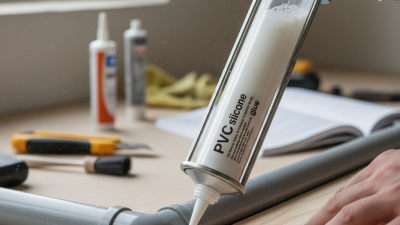
Why Choose PVC Silicone Glue for Global Sourcing?
Global sourcing decisions often begin with a simple question: can the adhesive perform consistently across borders? Pvc Silicone Glue deserves attention because it combines flexible bonding with practical resistance to moisture, vibration, and temperature changes. These qualities matter when products travel through humid ports, cold warehouses, and busy assembly lines. A reliable bond reduces rework, packaging damage, and unexpected production delays.
Dr. Steven Abbott, a recognized adhesion scientist, offers a useful reminder: “Adhesion is a system, not merely a glue.” His point is highly relevant to international procurement. Bond strength depends on surface preparation, curing time, material compatibility, application thickness, and storage conditions. A supplier may provide impressive laboratory data, yet factory results can differ. That gap requires testing.
Small details matter.
Experienced buyers should request technical data sheets, safety information, batch traceability, and clear curing instructions. They should also examine viscosity, shelf life, packaging sizes, and support availability. Samples deserve real handling, not only visual approval. Test them on the actual plastics, metals, rubber, or coated surfaces used in production. Check the bond after heat exposure, water contact, flexing, and transport vibration.
Pvc Silicone Glue is not automatically the best choice for every application. That would be an easy claim, and an unreliable one. Some projects may need faster curing, stronger structural performance, or a different adhesive chemistry. A careful sourcing strategy compares performance, supplier consistency, compliance documentation, and total delivered cost. When evidence supports the decision, global purchasing becomes less speculative and more dependable.
What Is PVC Silicone Glue and How Does It Work?
Why Choose PVC Silicone Glue for Global Sourcing?
What Is PVC Silicone Glue and How Does It Work?
PVC silicone glue is a practical term, not a single chemical category. It usually describes a silicone-based adhesive formulated to bond polyvinyl chloride surfaces. Most products cure through moisture in the air. During curing, reactive groups form a flexible silicone network. This network fills small surface gaps and remains elastic after drying.
The process is simple, but preparation controls the result. Clean PVC with a suitable solvent, remove dust, and allow the surface to dry fully. Apply a thin, continuous bead. Excess adhesive can slow curing and create weak internal areas. Some PVC compounds contain plasticizers, which may migrate into the adhesive over time. A primer or mechanical test may therefore be necessary.
Not a universal fix.
Grand View Research valued the global silicone adhesives market at approximately 3.6 billion dollars in 2023. Its report also projects continued growth through 2030. Fortune Business Insights estimated the PVC market at about 45 billion dollars in 2023. These figures explain the growing sourcing interest in compatible bonding materials, especially for pipes, flexible profiles, seals, and electrical components.
In practical sourcing, ask for peel strength, shear strength, curing time, temperature resistance, and storage-life data. Test the exact PVC grade, not a similar sample. This step is often skipped. It should not be. Supplier documentation helps, but independent validation remains more reliable for international production.
Key Properties That Support Reliable PVC Bonding
Why Choose PVC Silicone Glue for Global Sourcing?
Key Properties That Support Reliable PVC Bonding
PVC silicone glue can support reliable bonding when the formula matches the surface and working conditions. In practical assembly work, flexibility is a major advantage. PVC parts may expand, bend, or vibrate during use. A rigid adhesive can crack under repeated movement. Silicone-based glue helps maintain a resilient bond. It also offers useful resistance to moisture, temperature changes, and everyday handling. These properties matter for cable covers, seals, panels, and other PVC components. However, performance varies between formulations.
Surface preparation still matters. Dust, oil, and mold-release residue can weaken adhesion. I have seen clean-looking PVC fail because the surface was slightly greasy. That assumption can be costly. Check the technical data sheet for curing time, operating temperature, and PVC compatibility. A small test piece is wiser than a large production mistake. Global sourcing also requires stable packaging, batch records, and clear application instructions.
Tips: Clean the PVC first. Use a lint-free cloth and a suitable cleaner. Apply a thin, even bead. Avoid moving the parts during curing. Test peel strength after full cure, not only after one hour. Some surfaces need light abrasion, but excessive abrasion may damage thin PVC. Document the test results before approving a supplier. Reliability is built through evidence, not attractive claims.
Why PVC Silicone Glue Benefits Global Sourcing
Why Choose PVC Silicone Glue for Global Sourcing?
PVC silicone glue can support global sourcing when materials must survive movement, moisture, and changing temperatures. Its flexible bond helps reduce cracking on soft PVC parts, coated fabrics, seals, cable channels, and household components. This matters during long transport, where cartons may face vibration, pressure, and temperature changes.
A sourcing team should not judge the adhesive by appearance alone. Check viscosity, curing time, shelf life, and surface compatibility. Small details matter. Silicone surfaces can be difficult to bond, while PVC may contain plasticizers that weaken adhesion over time. Request cured test pieces from each supplier. Bend them, expose them to humidity, and inspect the bond after several days. This practical step often reveals problems that a technical sheet cannot show.
PVC silicone glue may also simplify international purchasing. Many suppliers can provide consistent packaging sizes, batch records, safety documents, and application instructions. These records support quality control across different factories. However, “universal” claims deserve caution. Formulations vary, and one product may perform well on rigid PVC but poorly on flexible PVC. Confirm curing conditions, ventilation needs, storage limits, and shipping requirements before placing a large order. A lower price can become expensive if rework, delays, or rejected goods follow. That part is easy to underestimate.
How to Select the Right PVC Silicone Glue Supplier
Why Choose PVC Silicone Glue for Global Sourcing?
How to Select the Right PVC Silicone Glue Supplier
Selecting a PVC silicone glue supplier requires more than comparing prices. The adhesive must bond securely with your exact PVC surface, texture, and production process. Ask for technical data, curing conditions, shelf life, and storage requirements. A dependable supplier should provide recent test reports and clear batch records. This evidence matters when shipments cross borders and production schedules cannot move easily.
Request samples from several batches. Test them on actual parts, not only smooth laboratory panels. Check bond strength, flexibility, odor, curing time, and appearance after temperature changes. Discuss minimum order quantities, packaging sizes, lead times, and replacement procedures before signing an agreement. A supplier who avoids specific answers may create expensive delays later. I have learned that a low quotation can hide inconsistent viscosity or weak after-sales support.
Tips: Confirm material compatibility in writing. Review safety documents and export packaging. Request a video audit or factory visit when practical. Keep a retained sample from every approved batch. Do not rely on a polished catalog alone. Also, leave room for doubt; one successful sample does not prove long-term consistency. A small pilot order may reveal problems that a large purchase would make painful.
Quality, Compliance, and Logistics Considerations for Buyers
Global sourcing of PVC silicone glue requires more than comparing unit prices. The adhesive must bond different surfaces, tolerate movement, and cure consistently across climates. A reliable supplier should provide viscosity data, cure-time records, batch traceability, and aging-test results. Small details matter. For example, a carton stored beside a hot container wall may experience temperature stress before production begins.
Quality systems also support buyer confidence. The ISO Survey 2022 reported more than 1.2 million ISO 9001 certificates worldwide, showing how widely formal quality controls are used. Yet certification alone is not proof of adhesive performance. Buyers should request production samples, peel-strength results, and test conditions. ASTM or ISO-based methods make comparisons clearer. I would not approve a supplier from paperwork alone. Real substrate testing is still necessary.
Tips: Ask for the Safety Data Sheet, Technical Data Sheet, shelf-life statement, and country-specific compliance documents. Check restricted-substance requirements for each destination. The European Chemicals Agency’s REACH framework can affect chemical communication and market access. Logistics deserve equal attention. UNCTAD reports that maritime transport carries over 80% of global merchandise trade, so delays and heat exposure can affect delivery quality. Use sealed packaging, temperature guidance, and buffer inventory. The World Bank’s 2023 Logistics Performance Index covered 139 economies, reminding buyers that local customs and transport reliability vary widely.
Why Choose PVC Silicone Glue for Global Sourcing?
Quality, Compliance, and Logistics Considerations for Buyers
The chart shows the EU RoHS maximum concentration values for restricted substances in homogeneous materials, where RoHS requirements apply. Buyers sourcing PVC silicone glue should confirm product composition, request current SDS and technical documentation, verify applicable market regulations, and align packaging and transport arrangements with the destination country.
Reference: EU RoHS Directive 2011/65/EU and Commission Delegated Directive (EU) 2015/863. Values are expressed as maximum percentage by weight.